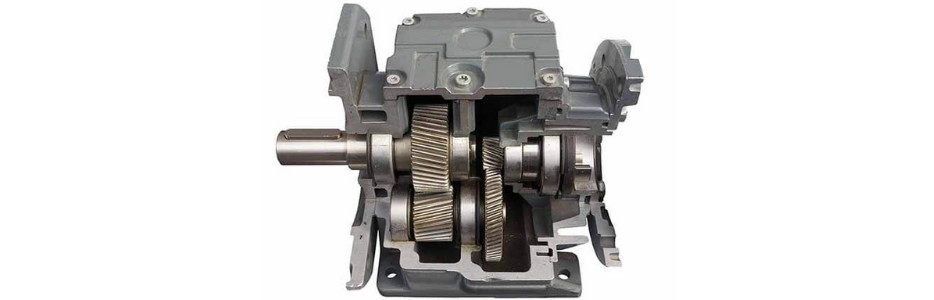
Three common types of gearboxes are helical, planetary, and worm gearboxes, which are distinguished by their gear arrangements and applications. Helical gearboxes use gears with teeth cut at an angle for quiet, efficient operation, while planetary gearboxes use a central sun gear, planet gears, and a ring gear for a compact, high-power-density design. Worm gearboxes connect non-parallel shafts, can achieve large gear ratios, and offer a locking mechanism that prevents back-driving.
Helical gearboxes
Description : These gearboxes feature helical gears, where the teeth are cut at an angle, allowing for smooth and quiet operation.
Characteristics : They can handle high loads and are very efficient.
Applications : Commonly used in the oil industry, blowers, and elevators.
Planetary Gearboxes
Description : Also known as epicyclic gearboxes, these use a central sun gear surrounded by several planet gears, which are in turn surrounded by a ring gear.
Characteristics : This arrangement provides high power density, compactness, and stability, making them ideal for high-precision applications.
Applications : Widely used in robotics, machine tools, and automotive transmissions.
Worm gearboxes
Description : These gearboxes connect non-parallel, non-intersecting shafts. The gear is a screw-like "worm" that drives a toothed wheel.
Characteristics : They can achieve very high reduction ratios, have few moving parts, and are known for being self-locking, which prevents the output from turning the input shaft in reverse.
Applications : Frequently used in heavy-duty applications like rolling mills, mining, and elevator drive systems.